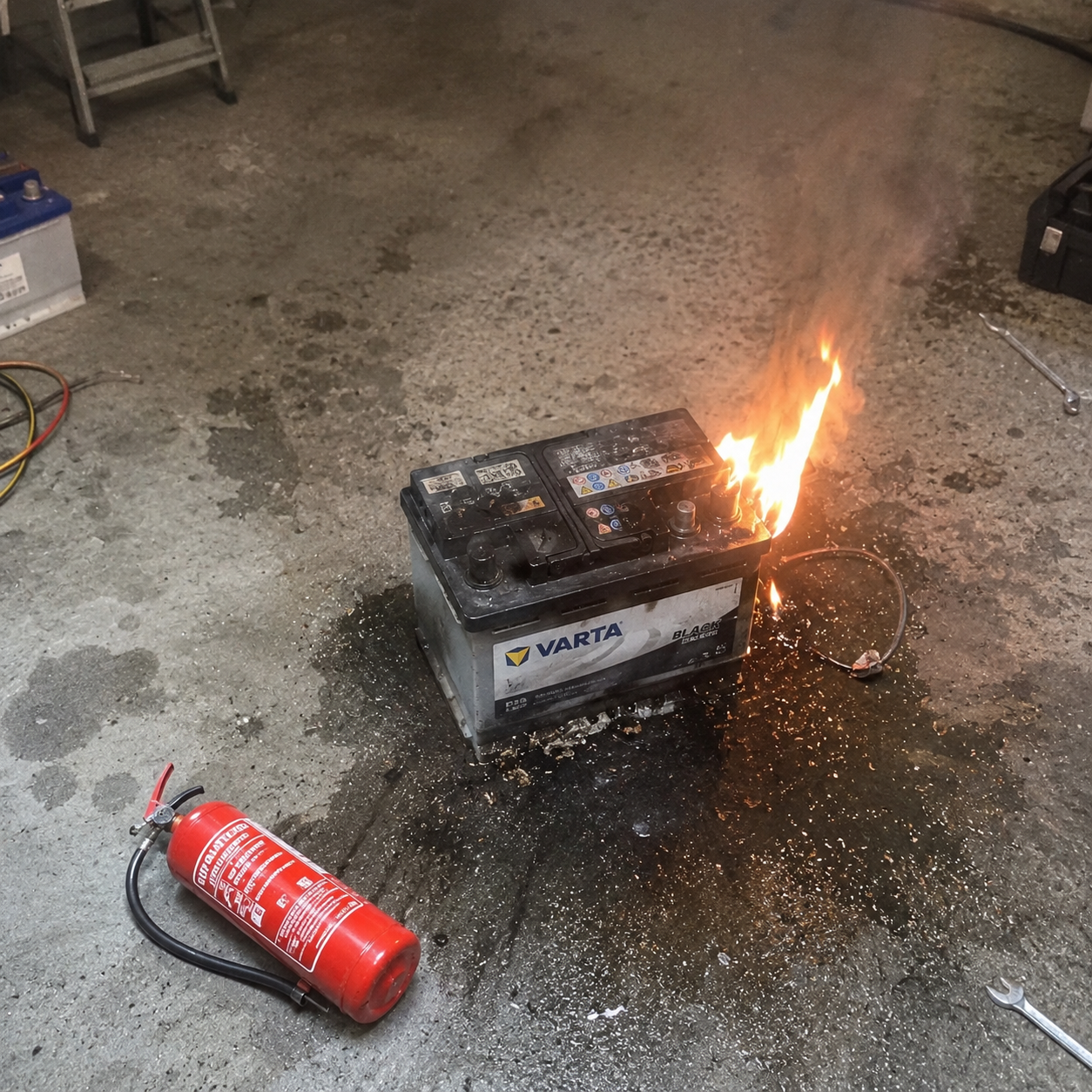
“The greatest risk is not the technology – it is the false assumption that the system is already de‑energized. Even after shutdown, capacitors can retain hundreds of volts – invisible and deadly.”
The five safety rules of electrical engineering are equally binding in the high‑voltage (HV) domain of electric vehicles. They form the systematic foundation of every safe de‑energization procedure. However, in the automotive sector, their practical implementation differs from classical electrical engineering. Galvanically isolated systems and manufacturer‑specific shutdown procedures require particular care.
Disconnecting completly
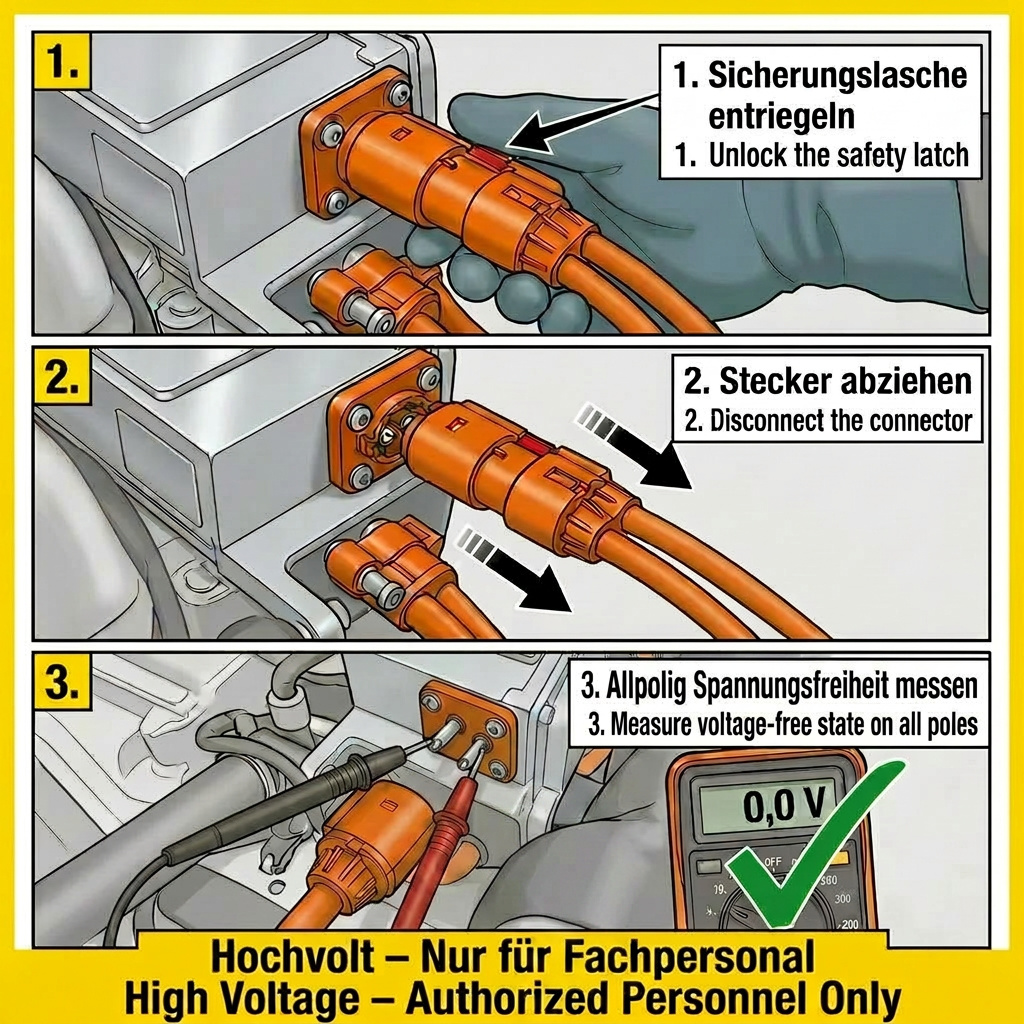
Actively and completely disconnect the HV system from the energy source. Manufacturer‑specific shutdown procedures must be followed without exception.
Securing against re‑energization
Secure the service disconnect, store the ignition key safely, and install barriers and warning signs.
Verifying absence of voltage
Use a suitable, calibrated measuring device (CAT III/IV) to perform an all‑pole measurement — never assume the system is de‑energized.
Earthing and short‑circuiting
Follow manufacturer instructions. In vehicles, this is only permitted with explicit manufacturer approval — galvanically isolated systems require a different approach.
Covering or barricading adjacent live parts
Insulate, cover, or physically block access to nearby components that remain energized.
The Illusion of Safety
A parked vehicle is not a de‑energized vehicle. Absence of voltage never occurs by itself — it must be actively established, verified, and documented.
No Routine Errors
High‑voltage systems do not forgive negligence. Every step of the de‑energization process must be carried out consistently, completely, and in the correct sequence.
Conclusion
Only the consistent application of the safety rules provides reliable protection against invisible, potentially lethal residual energy.