Knowledge Base

Blog & Expert Knowledge

Practical insights on HV training, DGUV 209-093, e-mobility and the safe handling of high-voltage systems – from certified instructors.

Whether you manage a workshop, work as an OEM engineer, or oversee fleet compliance – working safely with high-voltage systems demands more than intuition. In this blog, certified HV instructors break down what actually matters on the shop floor: Which qualification level does my team need? What does DGUV Information 209-093 require in practice? How do I document training in a way that holds up to inspection?

We publish expert articles on the five safety rules in high-voltage work, on the qualification levels from S/E through to 3S and 3E, on legal requirements for electric and hybrid vehicles, and on typical errors seen in workshops across Germany. You'll also find practical guidance for fleet managers, checklists, and explanations of VDE standards and DGUV Principle 303-001.

New here? Start with our article series "Avoidable Mistakes When Working with Electric Vehicles" – a practical introduction to the most common risks and how to avoid them systematically.
Topics in this blog

  • DGUV 209-093 – Requirements & Implementation
  • 5 Safety Rules for HV Work
  • Qualification Levels S/E through 3S / 3E
  • FHV, FuP, SoP – Qualifications Explained
  • Risk Assessment for High-Voltage
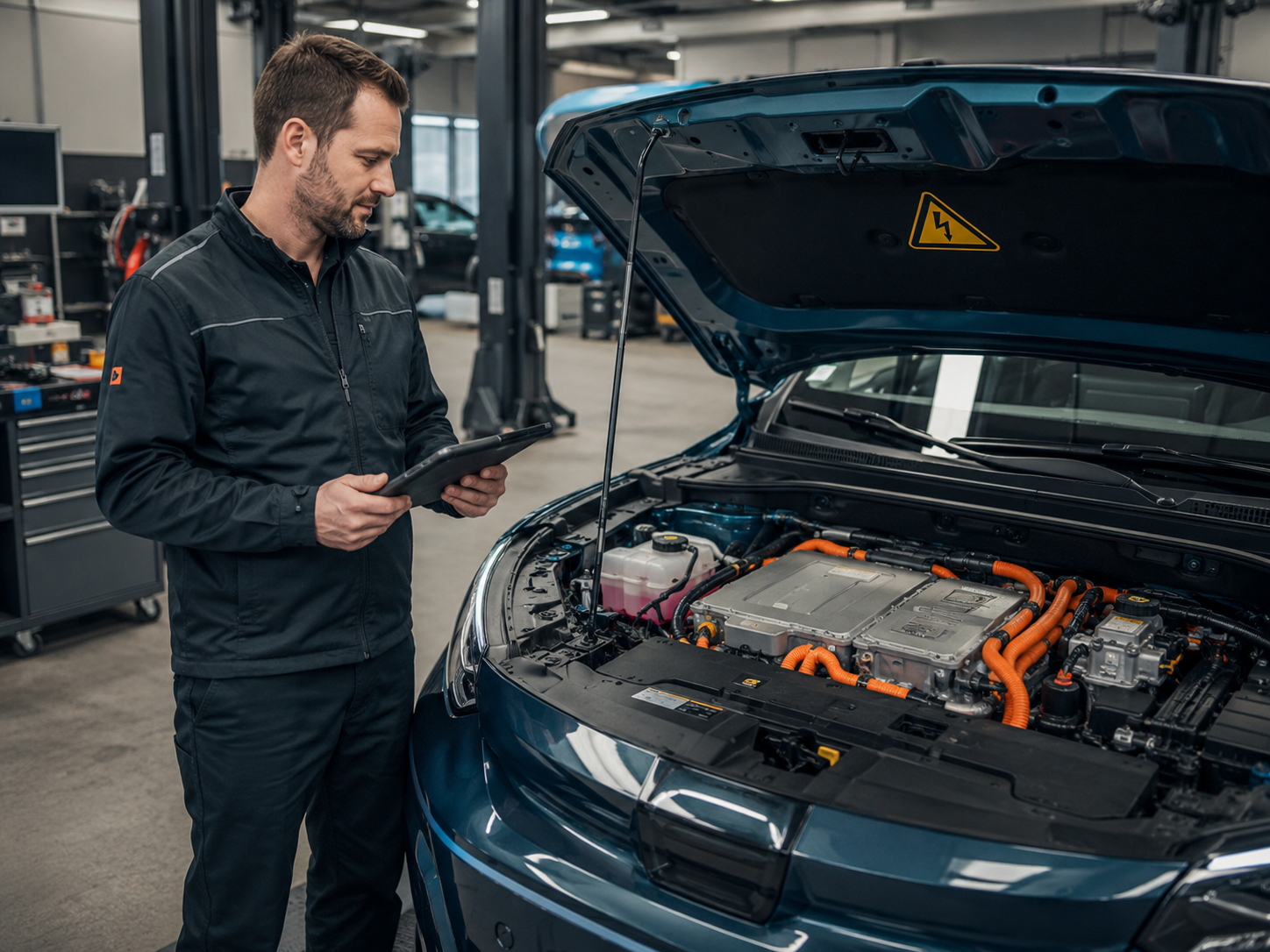
  • Electric & Hybrid Vehicles in Practice
  • In-house Training – Process & Tips
  • Standards: VDE, DGUV, BG Regulations
  • Annual Briefings – Legal Requirements
  • Case Studies & Field Reports
⚡
06 Jul 2026
Who Needs HV Training Beyond the Workshop?
Workshops, recovery services, fire brigades, car park operators: who needs HV training according to the DGUV matrix? Six target groups that…
Warum wir Elektrofahrzeuge nicht erden oder kurzschließen
03 Jul 2026
Why We Do Not Ground or Short‑Circuit Electric Vehicles
In conventional electrical engineering, grounding and short‑circuiting are familiar protective measures. For decades, they have been part o…
Spannungsfreiheit prüfen
24 Jun 2026
determine the absence of voltage
Safely verifying the absence of voltage is one of the most fundamental and at the same time most critical tasks in electrotechnical vehicle…
Sicherung gegen Wiedereinschalten HV
17 Jun 2026
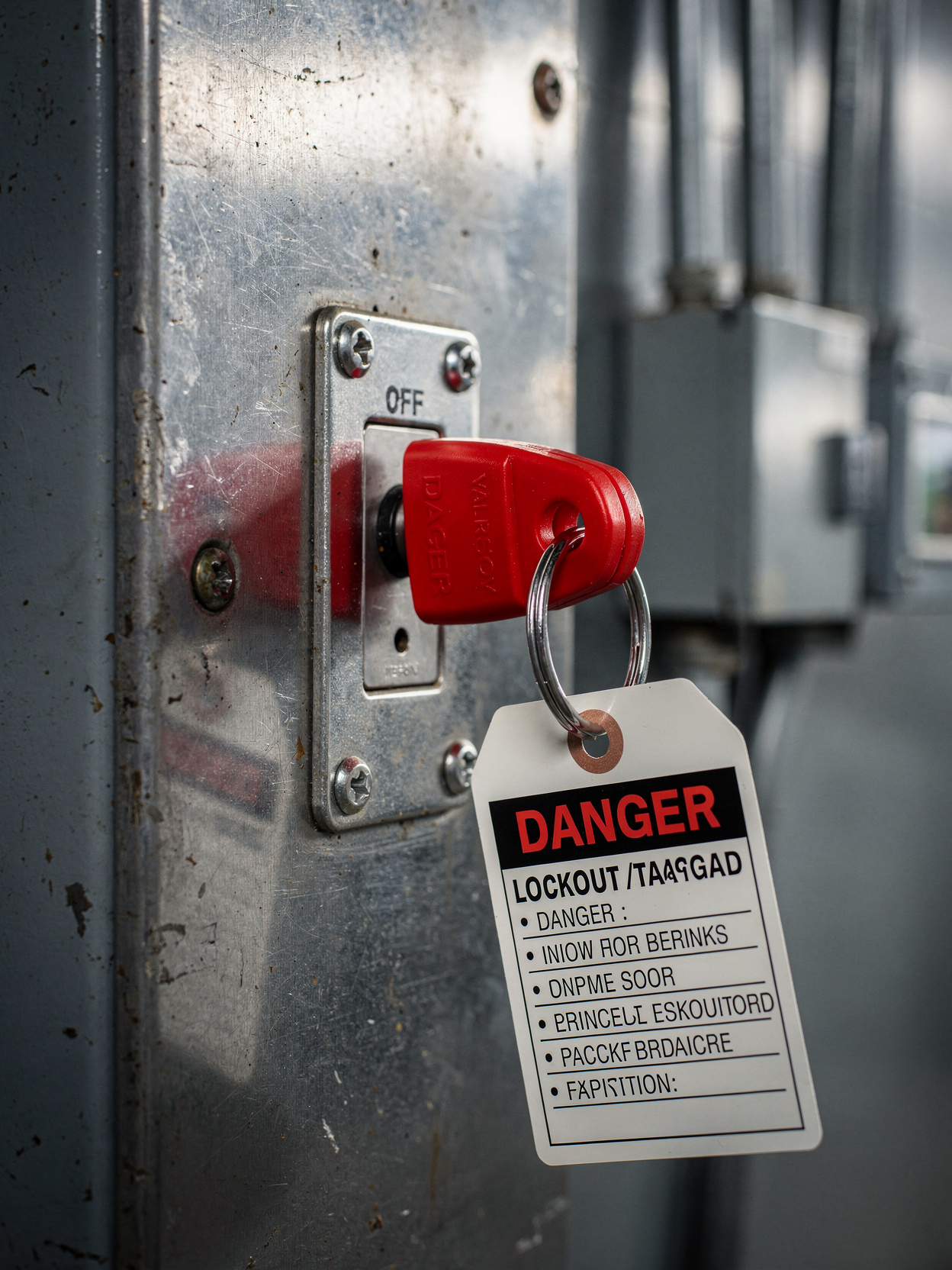
Lockout/Tagout for HV Vehicles
Lockout/Tagout procedures for high-voltage vehicles – mandatory safety measures under DGUV 209-093 for automotive workshops.
Schulung HV-Komponenten Stufe 2S und 2E
11 Jun 2026
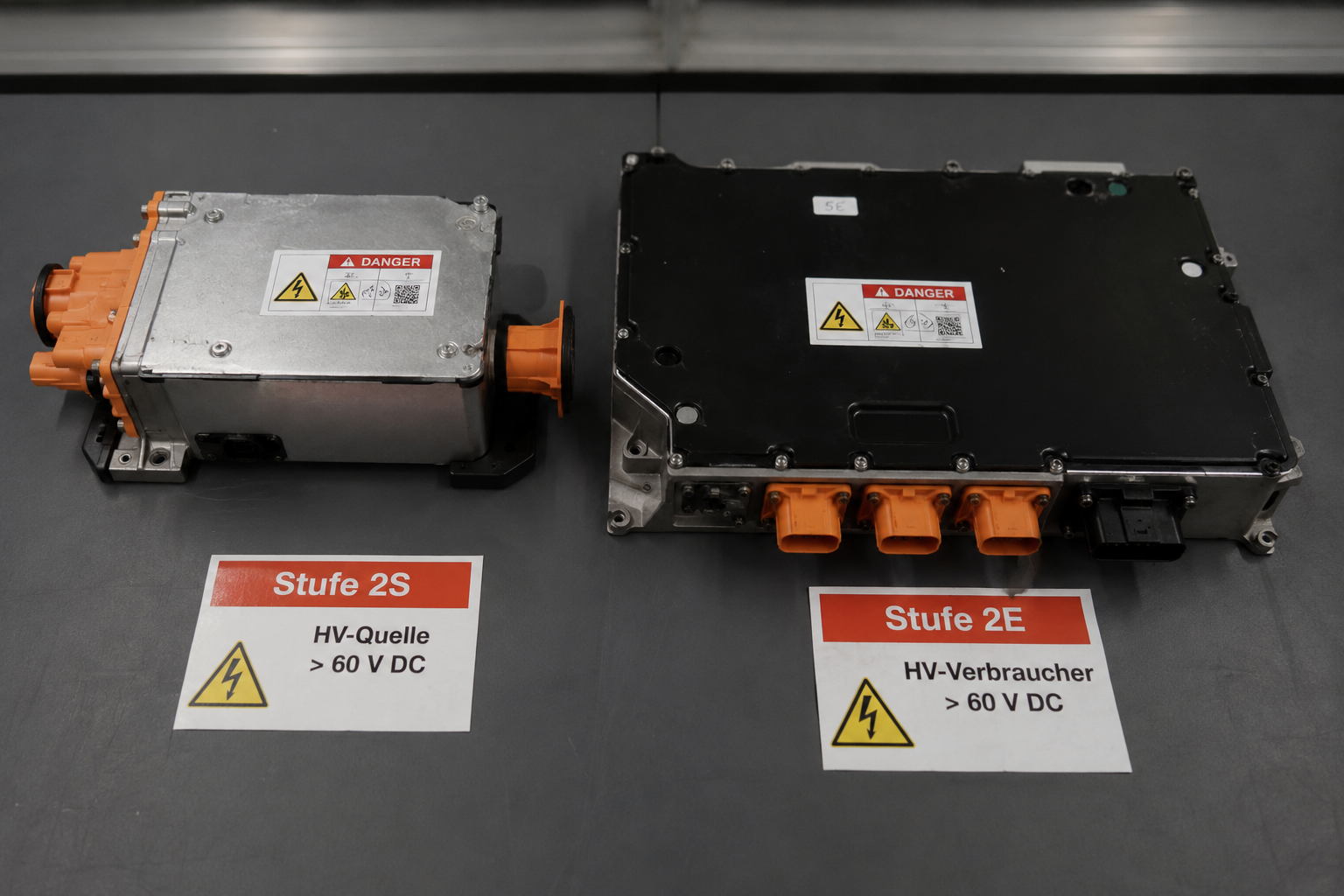
HV Component Training: Level 2S and 2E
HV component training for Level 2S and 2E: content, duration and examination requirements under DGUV 209-093 for automotive professionals.
HV-sensibilisierter Mitarbeiter: Schulung nach DGUV
11 Jun 2026
HV Sensitised Employee: Training under DGUV
Who qualifies as an HV sensitised employee? Training requirements under DGUV 209-093 for automotive companies and OEM suppliers.
De-energizing HV: Why Ignition-Off Fails
10 Jun 2026
HV De-energizing – Why Ignition Off Is Not Enough
Why switching off the ignition is not enough – the 5-step HV de-energizing procedure that keeps automotive technicians safe.
5 HV Safety Rules: DGUV 209-093
05 Jun 2026
5 HV Safety Rules – Zero Room for Error
Why zero mistakes are tolerated in high-voltage work – the 5 essential HV safety rules under DGUV 209-093 explained concisely.
EV Mistakes in Automotive Workshops
29 May 2026
Avoidable EV Mistakes – What Workshops Need to Know
The most common mistakes when handling electric vehicles – explained for automotive workshops and OEM suppliers under DGUV 209-093.