As more and more businesses operate electric and hybrid vehicles, one question keeps coming up: who qualifies as an HV-sensitised employee – and who actually needs which training? The answer is found directly in DGUV Information 209-093 "Qualification for Work on Vehicles with High-Voltage Systems", the binding framework issued by the German Social Accident Insurance (DGUV) for all businesses using or servicing HV vehicles.
What Is an HV-Sensitised Employee?
DGUV Information 209-093 defines the term clearly in Section 2, No. 7:
"Sensitised person: a person who has been informed about the intended use of HV vehicles and components."
An HV-sensitised employee is therefore someone who has been made aware of the specific hazards of high-voltage systems and instructed in their correct handling. In the norm's qualification model, this entry level is designated Level S (series vehicles) or Level E (development and research contexts). In everyday practice, "HV-sensitised employee", "sensitised person" and "Level S" are often used interchangeably.
Who Needs This Qualification?
According to DGUV 209-093 Section 5.1.2, sensitisation is sufficient for all personnel who operate HV vehicles as intended – meaning activities that do not involve any direct intervention in the HV system. Typical roles include:
- Drivers and fleet staff who operate electric or hybrid vehicles
- Cleaning staff carrying out interior and exterior vehicle cleaning
- Warehouse and logistics staff who move or reposition HV vehicles
- Personnel who top up fluids, change wiper blades or connect charging devices
- Apprentices in the automotive trades before acquiring deeper qualifications
In short: anyone who drives, charges or externally maintains an electric vehicle without touching HV components needs at minimum the sensitisation qualification.
What Is an HV-Sensitised Employee Permitted to Do – and What Is Prohibited?
Permitted Activities
- Driving and charging electric and hybrid vehicles
- Cleaning vehicle interior and exterior (with all service covers and bonnets closed)
- Topping up screen wash, replacing wiper blades
- Refilling known fluid points (engine oil, coolant)
Strictly Prohibited
- Opening service covers or the bonnet to work on the HV system
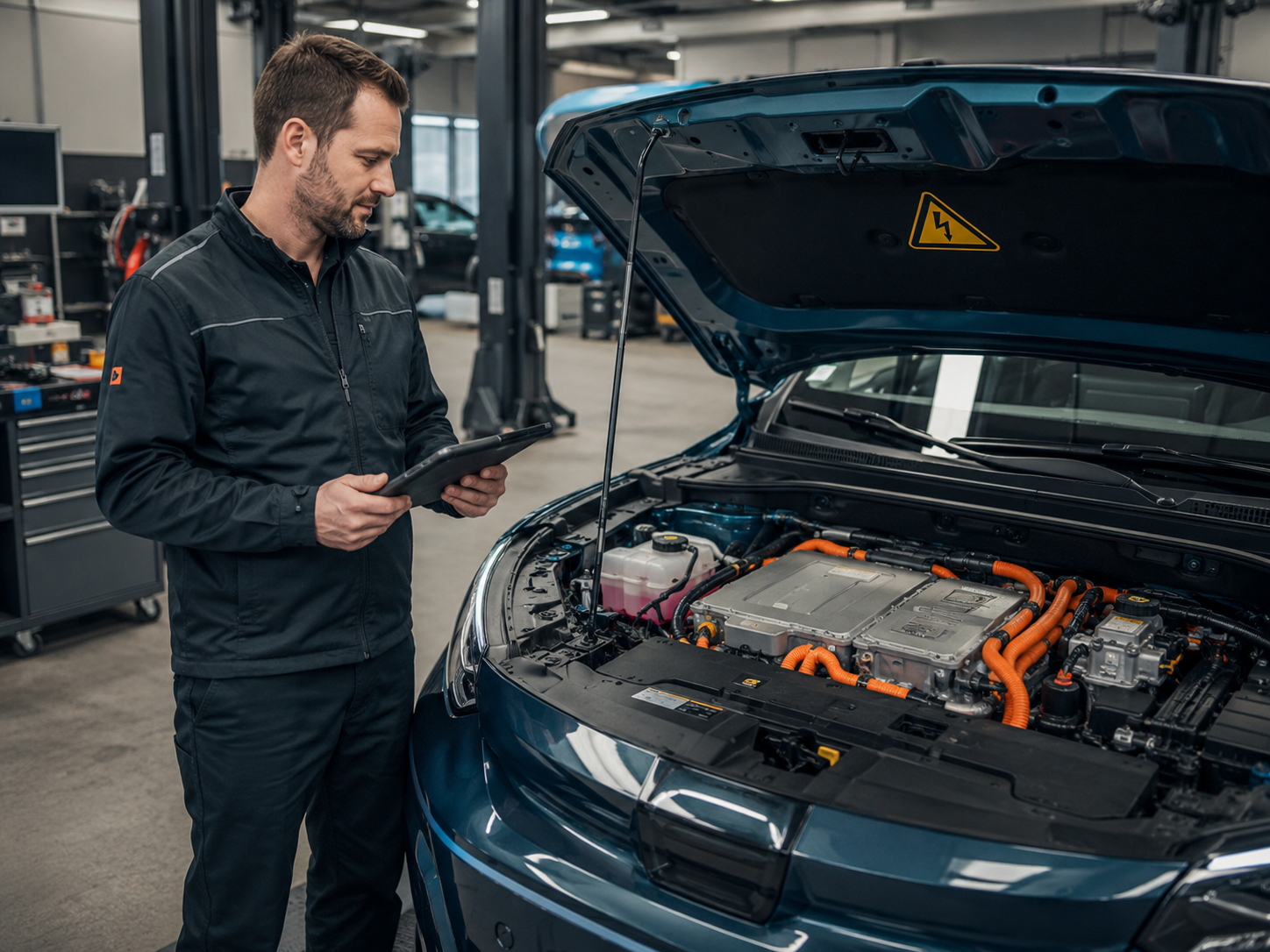
- Touching orange HV cables or HV components
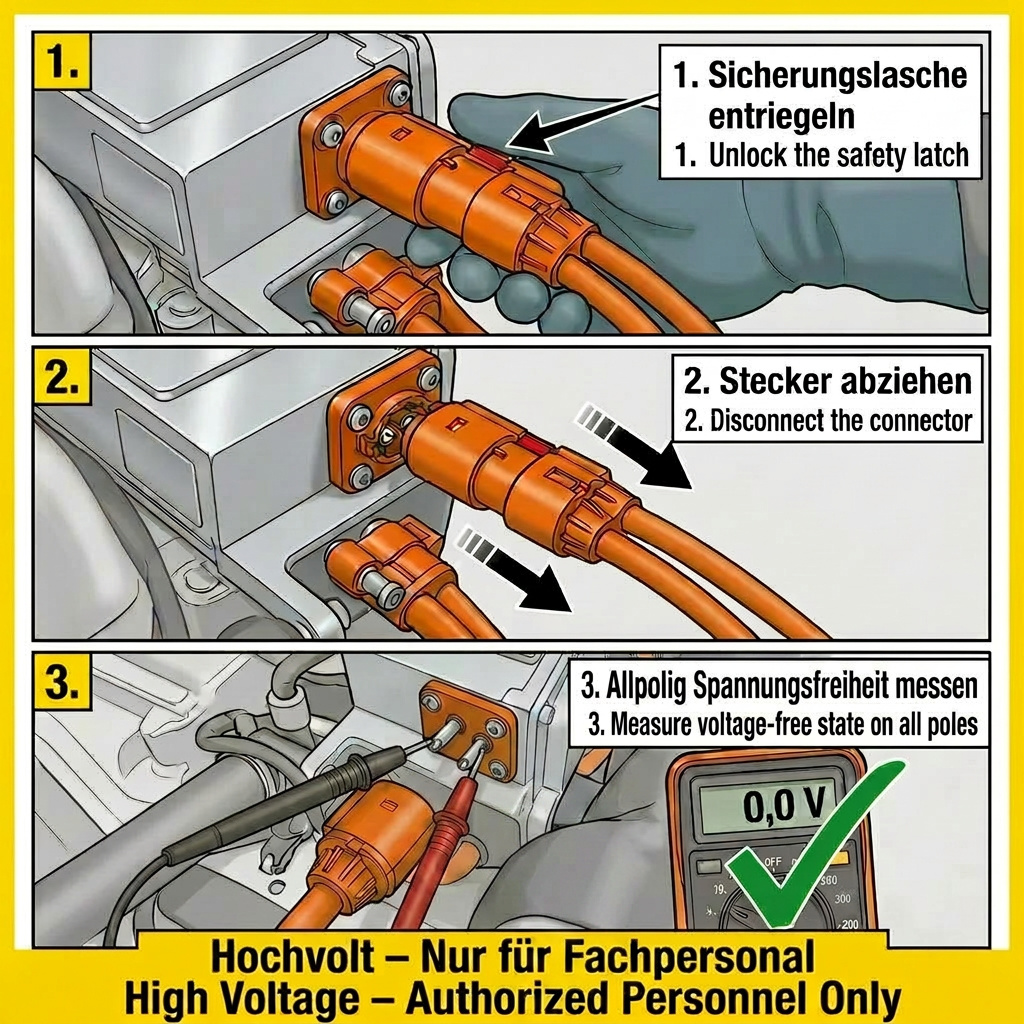
- Removing the service disconnect plug (reserved for qualified personnel)
- Any electrotechnical work on the high-voltage system
The DGUV uses a memorable guiding principle for all personnel below FuP level: "Hands off orange!"
How Long Does the Sensitisation Training Take?
The norm does not prescribe a fixed minimum number of training hours for sensitisation alone. What matters is that the following content is demonstrably taught and documented:
- Basic electrical hazards of HV vehicles (electric shock, arc flash)
- Intended use of HV vehicles and charging infrastructure
- Behaviour in accidents, emergencies and vehicle recovery situations
- Identification of HV components (orange cables, warning labels, signs)
- Location and operation of the emergency stop switch
In practice, sensitisation training typically runs as a half-day course (2–4 hours). Our Level S/E training covers all mandatory content and concludes with a participant certificate.
Who Is Authorised to Deliver the Training?
Under DGUV 209-093 Section 5.1.2, sensitisation may be delivered by the employer directly, or by a suitable person – for example, a qualified instructed person (FuP). A Qualified HV Person (FHV) is not required for sensitisation, unlike Level 1S instruction and above.
Annual Refresher Training Is Legally Required
DGUV Regulation 1 "Principles of Prevention" §4 mandates annual instruction for all employees – including HV-sensitised staff. Content and date must be documented. Employers who neglect this create significant liability exposure in the event of an accident.
What Comes After Sensitisation?
Sensitisation is the entry point in the DGUV 209-093 qualification ladder. Technicians who carry out general maintenance work on HV vehicles – such as oil changes or tyre replacements near HV components – already require Level 1S (Qualified Instructed Person, FuP). Independent work on de-energised HV systems requires Level 2S (Qualified HV Person, FHV).
An overview of all qualification levels under DGUV 209-093 is available on our HV Training Courses overview.